Sunday, December 9, 2012

Project Update: Keepin' It Alive!

Trying to Keep This Blog Alive

As usual, I'm way behind in my monthly blog update; this is partly due to the fact I have a few things on the go (which I'll expand on below), and partly due to the fact a few folks just wanted to see Tania a bit longer.  I get that, trust me!  From what I hear, her business in Bermuda is booming.

Update: Big Dawg Blog, Tuesdays

For those that don't know, James "OPT" Fitzgerald has a blog entitled Big Dawgs; this is where his 5 different groups of programming can be found, daily.  If you've ever been chomping at the bit for more than just "Dot-Com", wanted some serious intelligent thought put into it, but can't afford custom programming, this is where to go.
Tuesdays I'll be posting up a lil' sumtin-sumtin, more than likely related to nutrition (go figure).  I've already had a couple of posts, on Nov 29th and Dec 4th.  
Lab Example: Resilience

re·sil·ience

noun \ri-ˈzil-yən(t)s\
1
: the capability of a strained body to recover its size and shape after deformation caused especially by compressive stress
2
: an ability to recover from or adjust easily to misfortune or change 


Interpretation:  Ok, so what do we have here?  This is a snapshot of one of my clients that I regularly use as an illustration of resiliency in my seminars.  Without breaking patient confidentiality, this is a HIGH-level athlete that was preparing hard for the Open, and had multiple stressors affecting them.  A few key points:
  • Cortisol output is still excellent.
  • High nighttime cortisol: indicative of an immune/stress response, in this case, gastro-intestinal
  • DHEA:  Low, secondary to over-training
  • Progesterone:  Within a very healthy range; of note, in highly resilient athletes, both male/female, this will be elevated.  Why?  They have a greater capcity to create cortisol; progesterone is a precursor hormone to cortisol.
  • Melatonin:  75% secreted in the GI epithelials; optimal range, 18pg/mL+.  Secondary confirmation of GI issues.
  • Testosterone: Within "normal", but relatively low for this client.  Why?  Training stress has driven it down, and compensation is starting to fail.  For this athlete, normal testosterone should be 60+.
Is this a healthy person?  No---lets be clear on that.  This is an athlete that has GOOD compensatory mechanisms, but starting to show decompenstation---yet can still perform at a high level.

In the future, I'll go into some other lab examples.

Seminar Action!

This picture has nothing to do with anything, but it's kinda how I feel when I travel.  Shaken up, upside down, all over the place, but FUN.

So I've started doing a few more seminars (lectures?  Certs?  Bullshit sessions?  Do I make folks write a lame test with a busted pencil?  Would that make me legit?) in and around various CF affiliates.  Recently, I did a 2-day lecture at Reebok Crossfit Ramsay in Calgary, AB.  The two lectures I presented were Nutrition 101: The Foundations, and on Nutrition 201: Competition Fueling.  I had a blast both days, and Ken Andrukow, owner of Ramsay, was a super gracious host, and we had some good conversation over some VERY good tequila.  The crowd had some great questions and feedback, and anyone that knows me KNOWS I can yap for hours about this stuff.

  I'll be doing the same gig on my home turf of Crossfit Lethbridge on Jan 19th, and then waaaaaaaay up north at Crossfit VO2 Max Feb 2nd.

After that, I'm back down to sunny Scottsdale at the end of Feb to teach the implementation portion OPT CCP Level-1 Nutrition course.  Mat Lalonde, nutrition science Jedi master, will still handle Day 1, and my stage is Day 2.  James is around to keep a close eye on Mat to make sure he's not eating too much raw steak, and that I'm properly caffeinated.

My Training

I think I had mentioned a few posts back that I had Mike Fitzgerald (check THIS post for a brainstorm from Mike) from Optimum Performance Training in Calgary programming for me; as a quick update, things have been going PHENOMENAL.  I have been feeling stronger, faster, and PRs have been coming on a regular basis.  What I'm most impressed about is the fact my OH strength has FINALLY started to creep up to a respectable spot.  Some recent gems:
  • Push Press, #210
  • Front Squat, #300
  • "Nate" (AMRAP 20min 2 MU/4 HSPU/8 KBS, 32kg) 12 rds + 5 rds

Here's an example fo what a typical session looks like for me:
  
Nov 8th Day 2 - Jerk tech + Vertical Push/Pull + LP2 (Thruster/Chin)
A. Split Jerk, 2-2-2-2-1-1-1-1, 1:30 min - all sets of 2's @ 165lb, all sets of 1 @ 175lb
Completed.
B1. Depth HSPU, 1 rep x 10 sets, 1 min - build to a max effort depth by the end
Max depth 6.75", strict.  Super happy! Started at 4", worked my way up w/ various plate sizes (left my notes at the gym, I think it was 35# + 15# + 10#)
B2. Weighted Supinated Chin-ups @ 30X0, 1 rep x 10 sets, 1 min
Worked up to 92.9lbs (32kg KB + 22.5lbs in plates), PR.
C. 5 sets for max reps - Full Effort:
20 sec Thrusters @ 95lb
20 sec C2B Chin-ups
20 sec Burpees
6-7 min rest
Completed.  Lost seconds on start of thruster + transition to pullups, but burps were solid 20 sec worth.  Last set was tough on C2B, thrusters felt slow today, don't know why.  All unfractionated, pushed for speed on everything.

What it comes down to is this:  I should have done this years ago.

Thursday, October 18, 2012

Dynamic Musings & Rantings: Completely Unrandom, 3.0

More like Unrandom

Check that out: Oct 18th.  One month exactly since my last post (which seems to have frozen the thought process of millions of readers. Fitzgerald-speak will have that effect.  I'm sure folks are still reeling from the programming-insight epic-ness)

You'd almost think I had my shit together.  ALMOST.  But alas, this post is the compilation of a few dozen post-it notes with highly illegible chicken scratch that was, at the time, the best idea ever.  Anyways, Onward!  Let's start this Unrandom Show with a dose of total smoking hawtness:
So this is my good friend Tania; she is a figure competitor, mother of two young girls, and does online remote coaching, specifically for clients looking to improve body composition (aka look good nekkid).  And trust me, Tania knows a thing or two about improving body composition.  (Easy boys, she's married, and her husband is pretty jacked.  And she lives in Bermuda.  Yes, your life just started to suck a bit more).

So why am I telling you all this?  I get, quite frequently, requests for coaching with clients having this sole goal in mind; I've done it, but it ain't really my gig, and I'm partial to the competitive performance athlete.  Tania is absolutely fanatical about healthy living, and as such has a website: Health Fanatic where you can check her services out.  She also has a Facebook Page where she posts up health tips, and what I find quite cool, her kid's lunches.

 When you are a rockstar, people send you free shit.  When you are me, you get this in the mail.  

So a while back I was contacted by David Evans, and he wanted me to review his book, Cholesterol & Saturated Fat Prevent Heart Disease.  Of course, at first, I was like "WTF kind of godamn scam is this?"; once I shut off my over-caffeinated skeptical switch, I realized I had been reading posts from Mr Evans on cholesterol for years.  So, I jumped at the opportunity.  The book is small, just containing over a 100 pages that goes over, like it says, 101 different papers.  It's highly organized, gives a quick breakdown of each paper, and has a referenceable index and summary.  

This would be the perfect book to take to a party where a highly annoying T. Colin Campbell fanboi would be spouting forth; you could whip it out and beat his malnourished frame to oblivion in say, 2-3 backhands.  Or just drink more tequila.  Which is what I would do.

On a serious note, this is an awesome reference guide.  Paired with the behemoth of Good Calories, Bad Calories, one has the best of both worlds regarding the true history of cholesterol and SFA.  Tom Naughton of FatHead Movie fame does a great job of reviewing David's book here, also.

 Sciencey Goodness


J Int Soc Sports Nutr. 2012 Sep 13;9(1):43. [Epub ahead of print]

A buffered form of creatine does not promote greater changes in muscle creatine content, body composition, or training adaptations than creatine monohydrate.

Abstract

ABSTRACT:

BACKGROUND: Creatine monohydrate (CrM) has been consistently reported to increase muscle creatine content and improve high-intensity exercise capacity. However, a number of different forms of creatine have been purported to be more efficacious than CrM. The purpose of this study was to determine if a buffered creatine monohydrate (KA) that has been purported to promote greater creatine retention and training adaptations with fewer side effects at lower doses is more efficacious than CrM supplementation in resistance-trained individuals.

METHODS:

In a double-blind manner, 36 resistance-trained participants (20.2 +/- 2 years, 181 +/- 7 cm, 82.1 +/- 12 kg, and 14.7 +/- 5% body fat) were randomly assigned to supplement their diet with CrM (Creapure(R) AlzChem AG, Trostberg, Germany) at normal loading (4 x 5 g/d for 7-days) and maintenance (5 g/d for 21-days) doses; KA (Kre-Alkalyn(R), All American Pharmaceutical, Billings, MT, USA) at manufacturer's recommended doses (KA-L, 1.5 g/d for 28-days); or, KA with equivalent loading (4 x 5 g/d for 7-days) and maintenance (5 g/d) doses of CrM (KA-H). Participants were asked to maintain their current training programs and record all workouts. Muscle biopsies from the vastus lateralis, fasting blood samples, body weight, DEXA determined body composition, and Wingate Anaerobic Capacity (WAC) tests were performed at 0, 7, and 28-days while 1RM strength tests were performed at 0 and 28-days. Data were analyzed by a repeated measures multivariate analysis of variance (MANOVA) and are presented as mean +/- SD changes from baseline after 7 and 28-days, respectively.

RESULTS:

Muscle free creatine content obtained in a subgroup of 25 participants increased in all groups over time (1.4 +/- 20.7 and 11.9 +/- 24.0 mmol/kg DW, p = 0.03) after 7 and 28-days, respectively, with no significant differences among groups (KA-L -7.9 +/- 22.3, 4.7 +/- 27.0; KA-H 1.0 +/- 12.8, 9.1 +/- 23.2; CrM 11.3 +/- 23.9, 22.3 +/- 21.0 mmol/kg DW, p = 0.46). However, while no overall group differences were observed (p = 0.14), pairwise comparison between the KA-L and CrM groups revealed that changes in muscle creatine content tended to be greater in the CrM group (KA-L -1.1 +/- 4.3, CrM 11.2 +/- 4.3 mmol/kg DW, p = 0.053 [mean +/- SEM]). Although some significant time effects were observed, no significant group x time interactions (p > 0.05) were observed in changes in body mass, fat free mass, fat mass, percent body fat, or total body water; bench press and leg press 1RM strength; WAC mean power, peak power, or total work; serum blood lipids, markers of catabolism and bone status, and serum electrolyte status; or, whole blood makers of lymphocytes and red cells. Serum creatinine levels increased in all groups (p < 0.001) with higher doses of creatine promoting greater increases in serum creatinine (p = 0.03) but the increases observed (0.1 -- 0.2 mg/dl) were well within normal values for active individuals (i.e., <1.28 +/- 0.2 mg/dl). Serum LDL was decreased to a greater degree following ingesting loading doses in the CrM group but returned to baseline during the maintenance phase. No side effects were reported.

CONCLUSIONS:

Neither manufacturers recommended doses of KA (1.5 g/d) or KA with equivalent loading (20 g/d for 7-days) and maintenance doses (5 g/d for 21-days) of CrM promoted greater changes in muscle creatine content, body composition, strength, or anaerobic capacity than CrM (20 g/d for 7-days, 5 g/d for 21-days). There was no evidence that supplementing the diet with a buffered form of creatine resulted in fewer side effects than CrM. These findings do not support claims that consuming a buffered form of creatine is a more efficacious and/or safer form of creatine to consume than creatine monohydrate.

My Thoughts:  So, we know that CEE (creatine ethyl ester) compared to CM (creatine monohydrate) absolutely,  totally, sucks balls.  But what about Kre-Alkalyn, self labeled as "The World's Most Potent Creatine?" (I dislike that huge fallacy about as much as I dislike the "healthy" claims of Visalus)  Apparently, it kinda sucks balls, too.  Most folks deviate away from CM due to one effect:  GI bloating.  Doesn't happen to everyone, and being smart and NOT loading at 20g/5day completely negates this most of teh time.  Monohydrate, specifically the German trademarked Creapure (found in a lot of OTC creatine brands.  Just read the label.  Wait---you guys always read labels, right?  Right.) is the classic that doesn't ever let you down, just like The Man With No Name.  Ok, creatine and Clint really aren't related, but they are both awesome.  Just use the legit shit.

OPT CCP Nutrition, Day 2

So I had the opportunity to teach part of the OPT CCP Nutrition Level-1 in Scottsdale, AZ at the end of September.  The actual fact that this happened still seems a bit surreal to me.  How this came about:
Me, while talking to James:  "Hey man, what do you think of me coming down to Scottsdale in the fall, hang out, do some testing on some athletes?"
James: "Sure.  But why don't you come down in Sept and teach the Nutrition course"
Me, after long pause: "Hell yes, that will be a blast!"

What I actually thought, moments later: "Holy fucking chocolate covered Christ what the hell have I got myself into?!?!?!  Idiot!"

This seems pretty par for the course for James; he takes a simple idea, and blows it up into something huge.  Well, the course went phenomenal, I was teaching Day 2, which is implementation w/ clients---aka how to apply the science.  This was a big deal (to me), since this portion wasn't there before.  When I took the very first OPT course, I remember leaving thinking "Fuck.  I know a lot more than I did before.  But how the hell do I teach this to clients!??!"  A helluva lot of food logs, clients, mistakes, and progress later, and I have a bit of a system.  James wanted me to teach this, and it seemed to be well received by the attending coaches.
 Mat Lalonde (good interview here) of course, killed the science on Day 1.   Since we were both staying at the same hotel, I got a chance to hang out with Mat for most of the weekend; definitely a cool dude, has a crazy huge weighted dip (think he was at 180ish for 5 reps), and I even let him squeak by me in a short lil' DU/T2B 5 rounder, ha!  
We did check out a VERY sick restaurant called Fogo de Chao---Brazilian BBQ.  All you can eat meat, and a salad bar.  Holy Fuck.  Is that perfect, or what?  I had to tap out at about what I estimate at 20oz meat.  I think Mat ate double that.  Seriously out of control.

Next OPT course is end of Feb, and I *might* be heading to Scottsdale in Dec to put together the online version of the nutrition course---still working on the details.  Very stoked about the whole thing, though!


I'll leave you with this (poem sent to me from my good friend Sean'O):


Ode to Bacon
by Tom Vale

Light the burner, woosh,
the pan clatters to the grill.
Unwrap the paper, treasure awaits inside.
Black and silent burns the pan, this witches cauldron about to perform magic.
In mere moments, the silence turns to sizzling, cracking, popping.
The aroma wafts up, intoxicating,
but only a false phantom of the true blissful taste which awaits.
Turning, browning, crisping.
The anticipation is agony, an exercise in patience and restraint.
It is time, the tongs lower in and victory is pulled out.
Lowered to the plate like a newborn.
It is time.
You are mine.
Bacon

And, of course, some nice bacon-ey science:

Tuesday, September 18, 2012

Rapid Fire with Michael Fitzgerald


 Click the above and you will learn how to train to live.

So I'm deviating from my typical Sciencey Goodness, geek-out-on-labs, and opinionated on CrossFit type stuff with something pretty damn cool: Q & A with Michael Fitzgerald.  Right now, you're either going "OMFG this is epic", or you are like "who?!!?".  If you are the later, I'll help you peel that rock off the hole you've been living in, and fill you in.  I was introduced to Michael quite a while back in 2009, but didn't really get to know him until just a few months ago when we starting talking more frequently.  Michael had given me some awesome business advice, we had talked labs/clients a bit, and I came up with the idea of a Q& A for the blog.  

As it seems with most things Fitzgerald-like, they tend to become bigger and better than initially imagined.  Michael and his girlfriend Alyssa (Alyssa's Food Evolution --check it out, wicked recipes!) came down to Lethbridge over the Sept long weekend, and I had the chance to learn a lot about him and his business.

Education & Athletics Background:

Born July 11th, 1986, and raised in Wabush, Newfoundland and Labrador
183-186 lbs, 6’1”
Graduated with a First Class Honors degree in Human Kinetics from St. Francis Xavier University in May 2008. Honors research was centered on post-activation potentiation methods in warm-up and practical application to power output on a cycle ergometer. Since graduating from St. Francis Xavier University in May 2008, I have worked over 6000 hours doing one on one coaching, program design, physical assessment, nutrition prescriptions, and the like. As well, I try to be diligent in my reading and research pertaining to all things related to optimizing performance.
Best Performances in Fitness Competitions
2009 CrossFit Regionals, Canada West – 3rd
2009 CrossFit Games – 11th
2010 CrossFit Regionals, Canada – 4th
2010 CrossFit Games – 34th
2011 Reebok CrossFit Regionals, Canada West – 8th
2011 OPTathalon – San Diego – 2nd
2012 Reebok CrossFit Regionals, Canada West – 7th
This is the first year that I had individual coaching clients competing in the Reebok CrossFit Games, namely Joey Warren as a male individual competitor, and Michelle Savard as a female masters athlete (45-49 years). My client’ range from age 14 to age 61, all of them have their own path and desires in fitness. But, my two largest groups of clients are young hockey players looking to make it to the next level and fitness athletes. Fitness athletes probably make up more than 50% of my clientele.

Coach or Athlete?  Both.


Rapid Fire Q & A:

1) Thoughts on this year's Regionals; you placed extremely well, and had a great write up on your thoughts on the programming.  Was it better/worse than years before?

I am very biased in my opinion on which years I would view to be the best assessments of fitness, and I will always say the Regionals in 2009 and 2010 were better tests than 2011 and 2012. I do not say this because I did not qualify for the Games in 2011 or 2012, but based on my philosophy and definition of fitness. In my opinion, the Regionals in 2011 and 2012 were similar in their assessment of an individual’s fitness, as was witnessed by the same 2 competitors making from our Regional for the past 2 years.
That being said, I was very happy with my finish in both 2011 and 2012, as events like those are not my bread and butter like 2009 and 2010 were, as is the OPTathalon. For me to be able to perform in a competition like 2011 and 2012 and to finish very well amongst great competitors was very rewarding.

2) Pantera or Lady Gaga?
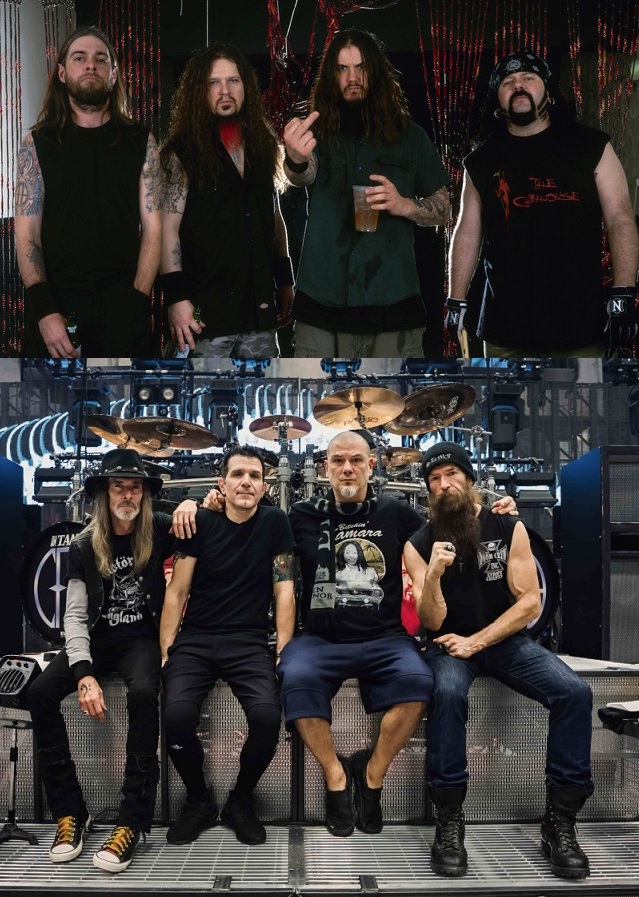
Pantera. If you had said “Pantera or Adele”, it would not have been as easy! (Side note---Mike has me hooked on Deadmau5.  I have no idea how this happened.  But it has.)

Yup, these dudes will work just fine for a lactate endurance session.

3) Globally, across all athletics, what the most common deficiency you see as a trainer/coach?

For fitness athletes, the “reality” of what you have to do in order to achieve what you are seeking. The same goes for hockey players. Dedication cannot be just a word that is thrown around and put on t-shirts, it must be part of you and you have to show it with your daily actions. I cannot comment on all athletics with great accuracy on this topics as I do not work with enough varied athletes, there would have to be a round table discussion in order to shed light on this topic.
Specifically to fitness athletes, it would be the above, plus not having a coach, then inadequate squatting strength and stamina, pressing strength and stamina, snatch ability, and aerobic power (in no particular order).

4) Recently, we had a good conversation regarding different energy systems, and how CrossFit athletes fail to target and work on these.  Specific to CrossFit, what the biggest hole in these systems that you see, and how do you program for this?

The biggest hole in the competitive CrossFit athlete is that the large majority do not have a well developed aerobic system, one capable of handling large volumes of work and one capable of elite performances in the 5-30 minute time range. I know that is a large range of time, but the idea still applies. But, more important is what qualifies as a legitimate test of this energy system, because if not tested properly then you have no useable data or reference point on which to base your program. Some very easy assessments of this system are 2k Row, 1.6k Run, 3k Run, AMRAP in 15 min of 15 KBS – 32kg/15 Burpees, 5 rounds of 1000m Row/15 Chin-ups/15 Thrusters/15 Burpees, or 300FY on the Airdyne. Some examples of tests that would not be useful as an assessment for the competitive CrossFit athlete would be “DT”, Event’s 2 and 4 from the 2012 Regionals, 3 rounds of 10 power clean @ 225lb/10 kipping HSPU to 10” depth, the rope climb/sled push event from the 2012 Games, etc.
What fitness athletes fail to realize is that without the aerobic system, they have nothing. Their ability to sustain, to recover, and to have longevity in the sport rests on this system. However, developing one takes time, patience, and in the sport of fitness, it takes programming smarts. You can’t just start rowing or running more, doing more burpees each week, “hit a long metcon” from time to time. Well you can, but it is not the best path you could take. Progressively building the capacity of this system week to week, month to month, while not causing excessive loss of muscle mass or overall strength, is an intricate process.  Again, for the fitness athlete, without having sufficient ability in this system you will never get to where you need to be in this sport, just like if you are not strong enough you will not get anywhere either. But, the extra side effect with lacking an aerobic system is that all too often you will accumulate excessive lactate, you will take breaks when you shouldn’t be, these breaks will be too long, and in general you will have to work too hard (both physically and mentally), too often to accomplish portions of workouts or competitions that others are able to complete in a very sustainable and manageable fashion. The negative part is that from this lack of ability your recovery will suffer, your hormonal profile will suffer, and ultimately what matters most to athletes (or wanna be’s like me) your performance will suffer in the long run.


5) Cheat Day:  Beer, Bread, or Sugar?

Beer(s)
First started eating like I currently do in 2004, so the Paleo movement is not news to me…it was called good nutrition and low carb back then (i.e. check T-Nation, Dr. Mercola, Weston A. Price, etc.).  What I need to keep in check on a weekly basis is my indulgence of import Belgium or German beers and dark chocolate.


Once a week.  And you MUST talk about energy systems whilst enjoying.

6) We also recently talked about carbohydrate intake, and why this is so essential to Crossfit athletes and any high-volume/high intensity athlete.  Why do you think we see so many "low carb" athletes out there?

When people discuss nutrition on a daily basis, they largely forget to put it into context. Discussion of the needs of the 50-year-old overweight and out of shape individual, is a far cry from the needs of a 20 something, lean, fitness competitor training 8-15 hours per week and hitting plateaus.

Side Note:  After a wicked dinner of applewood smoked Broeck pork, sweet potato/horseradish mash and bacon wrapped green beans, we did get into a couple of imported German beers.  And let me tell you---the convo went down the rabbit hole of cell permeability in relation to saturated or polyunsaturated fats, mitochondrial energy use, and systemic alkalinity.  Let's just say while Mike might be known for programming, the dude is no slouch in the science of nutrition department!


7) If you weren't running a successful gym and coaching high-end athletes, what would you be doing?

Currently pursuing some kind of PhD I imagine. Higher orders of learning and understanding are necessary for me. Just so happened that I landed where I am today, exploring the topic of fitness.

 
8) CrossFit games 2012 picks.  GO.

 I know it is after the fact, but my pick for the Men’s side was Rich Froning. I honestly did not think anyone could beat him. My pick’s for the Women’s side were Annie Thorisdottir or Elizabeth Akinwale. I thought there may be a slight chance that Akinwale could beat Annie if the events were like the Regionals were.

10) You and James are well known for testing, building, and creating fitness in a defined and empirically data driven manner (in other words, how to fucking do it right!).  CrossFit seems to have gone the path of spectator driven fitness competition.  Do you think this is a trend that will fizzle, or something that will continue to evolve?

I honestly have no idea how things will play out for CrossFit. As for your comment about James and I, I believe there are many more players involved than us (and I am only a small one at that). If the platform were appropriate, you would have a lot of the best coaches and fitness minds in the world ready and willing to weigh in on the topic. There are literally too many to mention. But, a small version of this will take place at the OPTathalon in San Diego in October 2012. Myself, James, Max El-Hag, CJ Martin, Patrick Ward, and Joel Jamieson will have a round table discussion during the Big Dawg Bash learning portion. I expect the attendees to be involved in the discussion as well, because they will likely have some good ideas or critiques for us as well. There should be no bias to where guidance or direction could come from.
What I am trying to get at is that for the “Sport of Fitness” to move forward and to progress into a more legitimate test of fitness, there has to be more assessment and critique done. This should be done by people not involved or employed by CrossFit Inc. 

Side Note:  If you want to actually see a truly legit test of fitness outside of the Olympic decathlon, you need to check out the OPTathalon.  The events never change (think on this for a bit.  No, seriously, don't be an ADD douche and go look at porn or some random programming--think about it) and are scored on a point basis based on top end scores previously held.  Did you watch the Olympic decathlon?  Yeah, hi, welcome to legit testing in fitness.

OPT Calgary, 3000sq ft of testing awesomeness

11) Name the three biggest business mistakes gym owners/coaches do.

1) Not having a good accountant.
2) Not having a business coach.
3) Having no idea of how to properly assess and safely progress an individual from their current ability towards their goals.

12) Name your go-to PWO meal

Max Reload OR some combo of whole food protein and sweet potatoes

13) Adrenal dysfunction is fairly rampant in a lot of high-end athletes, especially CrossFit athletes.  Seeing a ton of busted up and beat down folks.  What the hell is going on?  Is this a nutritional issue, training issue, or genetic issue?

Better call Dr. Drobot in on this one. Seriously, because unless you can see what is going on inside making claims about what is causing it is naïve. ( Side Note: I 100%, abso-fucking-lutley agree.  The more labs I see, the more I realize just how important it is to "look under the hood", and not make any guesstimations on an athlete's sate of health.) But, I would hypothesize that is largely 3 main factors: 1 – poor recovery (nutrient timing, sleep qualify, and aerobic function), 2 – under nutrition (not enough of the right stuff), 3 – too much stress from sources outside of fitness training.  It really is hard to say though.


14) Give us an example our how you'd periodize a CrossFit athlete's training for the year.

The following is based on someone that does not compete in any other events throughout the year besides the CrossFit Open, Regionals, and Games. As well, it is a VERY general layout, non-individualized, and by no means exhaustive. Additionally, the layout ends after the Open begins, as priorities, training outcomes, and placing in the Open would dictate next phase of training.

Athlete # 1 – failed to reach the Regionals, finished poorly in the Open
Priorities are based on the assessment of current abilities, but if they did finish poor in the Open, you can assume they do not have very good aerobic power relative to CrossFit. This will be very important to improve before the Open next year, because unless you have this, you will not make it through the Open. The strong and powerful athlete will not always make it to the Regionals, aerobic power will be necessary. In this case:
May-August priority – improve Olympic Lift maxes, improve pressing/pulling/squatting/bending strength, build cyclical zone 1 volume and capacity, introduce and build volume of lower intensity multiple modality MAP (Maximal Aerobic Power) training. Little to no lactate specific training sessions (athlete dependent).

August – November – improve Olympic Lift maxes, maintain pressing/pulling/squatting/bending strength, reduce cyclical zone 1 work, no running at all, introduce and build volume of higher intensity multiple modality MAP training, while still training lower intensity MAP sessions per week as well. Lactate work as needed to improve aerobic power (athlete dependent).

November – February – maintain Olympic Lift maxes, build stamina and repetition of Olympic Lifting and other high load movements, maintain pressing/pulling/squatting/bending strength. Maximize high intensity MAP training volume without excessive decreases in strength, introduce CrossFit based testing weekly or bi-weekly, lactate work increases in volume per week, remove cyclical zone 1 work, replace with CrossFit specific skill work.

Athlete # 2 – failed to reach the Games, finished poorly in the Regionals, but did really well in the Open.
Again, priorities are based on the assessment of current abilities, but if they did finish poor at the Regionals, you can assume they do not enough strength relative to their mass, they are lacking in the ability to handle high loads for high numbers of reps, and their Olympic Lifts are insufficient.

May-August priority – improve Olympic Lift maxes (ensuring Olympic lifting 2-3x per week at varied intensities each session so as to not excessively drain the persons CNS) improve pressing/pulling/squatting/bending strength and stamina, build cyclical zone 1 volume and capacity, no running at all, introduce and build volume of lower intensity multiple modality MAP (Maximal Aerobic Power) training. Little to no lactate specific training sessions (athlete dependent).

August – November – improve Olympic Lift maxes (still with multiple training times per week on this, again with varied intensity), build stamina and repetition of Olympic Lifting and other high load movements, build pressing/pulling/squatting/bending strength and stamina, maintain cyclical zone 1 work, no running at all, introduce up to moderate volumes of higher intensity multiple modality MAP training, while still training lower intensity MAP sessions per week as well. Very little lactate specific training sessions.

November – February – improve Olympic Lift maxes (still with multiple training times per week on this, again with varied intensity), continue to build stamina and repetition of Olympic Lifting and other high load movements, build pressing/pulling/squatting/bending strength and stamina, maintain cyclical zone 1 work, no running at all, increase volume of higher intensity multiple modality MAP training, while still training lower intensity MAP sessions per week as well. Very little lactate specific training sessions.

16) What motivates you to continue doing what you do each and every week? What does your work schedule look like? Training schedule?

My business has 2 seasons, extremely busy and busy. Our summers are always very busy due to the increase of hockey athletes that come in for training during their off-season. I work about 60-70 hours per week during the summer (all responsibilities included) and I work about 45-55 hours per week during the fall/winter/spring (all responsibilities included).  ---aspiring business owners take note!
My current training schedule is based on peaking for the OPTathalon in October, so here is the weekly layout for the next 4 weeks for those interested:
Monday – Clean and Jerk technical based work + Snatch moderate intensity + Front Squat moderate/Pressing intense + Upper body pushing and pulling stamina
Tuesday – Throwing med balls + Jumping variations + Rowing Lactate Fatigue repeats + MAP based Running + Core work
Wednesday – Jerk technical work + MAP – high intensity, low volume
Thursday – off
Friday – Clean and Jerk intense + Snatch moderate intensity + Back Squat moderate/Pressing intense + Upper body pushing and pulling stamina
Saturday – Noon – MAP – higher intensity, low volume, PM – Running MAP
Sunday – off

Once the OPTathalon has finished, my training template will drastically change as I try to prepare for the upcoming CrossFit season.

My motivations are based on business and coaching, but the two are inter-related. Without having a successful and sustainable business I would not be able to do what I do every day, which is to help people achieve their human potential. Assuming my business continues to grow as it has for the past year, my goal as a coach is to become the best there is for fitness athletes, period. That may seem very ego-ish, but what the statement means to me is that want to make the athletes I work with do things they never dreamed possible, be able to take these people from the basement (so to speak) to the top, or at least near it. Be able to take those at the top, and take them higher, or at least keep them at that level for a very long time. Refining your process and methods as a coach is hard and time consuming, as so much of what I prescribe at this time in my career is more intuitive than anything and this ONLY comes from experience. To help explain what I mean by “intuitive” and “experience” I will leave you with this excerpt from “Transformation”, by J.G. Bennett.  


So needless to say, my weekend with Mike was extremely eye opening; at 26, it's pretty hard to believe he knows what he knows about business, fitness, nutrition, and training.  Since his take over of Optimum Performance Training in Calgary from his brother James, (who opened OPT in Scottsdale, AZ,) his business has grown substantially.  I won't get into numbers, but lets just say Mike is taking OPT Calgary to a whole other level.

One of the highlights was getting a chance to do some multiple-WOD testing at CFLA...

Trust me, this was not a race.

...And also looking forward to customized coaching & programming.  Where will it take me?  That remains to be seen.  I have some goals, and now have the guidance.  The journey is going to be enlightening, I have no doubts.